Default translations and market translations
Learn when to use the default translation for all markets and when to add a translation that only one market shows.
Translate once in the default translation for all markets. Add a market translation only where one market needs different text. Contact us to turn this on
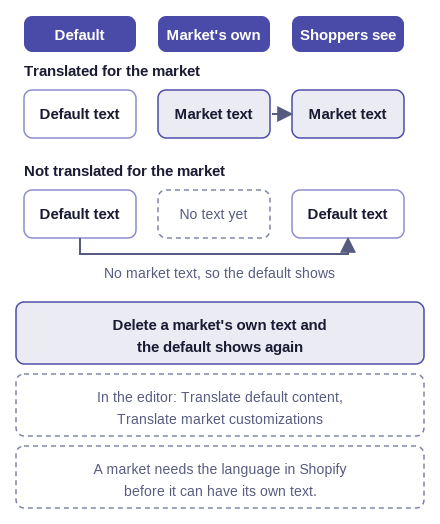
The two kinds
- Default translation. It appears everywhere, unless a market has its own translation.
- Market translation. It appears only in that market. Items you did not translate for the market show the default translation.
For example, use a market translation when one market needs a different word for the same product. Leave everything else on the default.
Before you start
- Create the market in Shopify and sync it. See How SmartCS works with Shopify Markets.
- The market must sell in the language. A market that does not sell in the language shows this message: This market doesn't sell in this language, so it can't have its own translation. Add the language to the market in Shopify first.
- Market translations must be switched on for your store. If they are off for now, you can read them but not edit them. The page then says: Editing market translations is switched off for now. You can view them, but not edit them.
Steps
Open Content translation
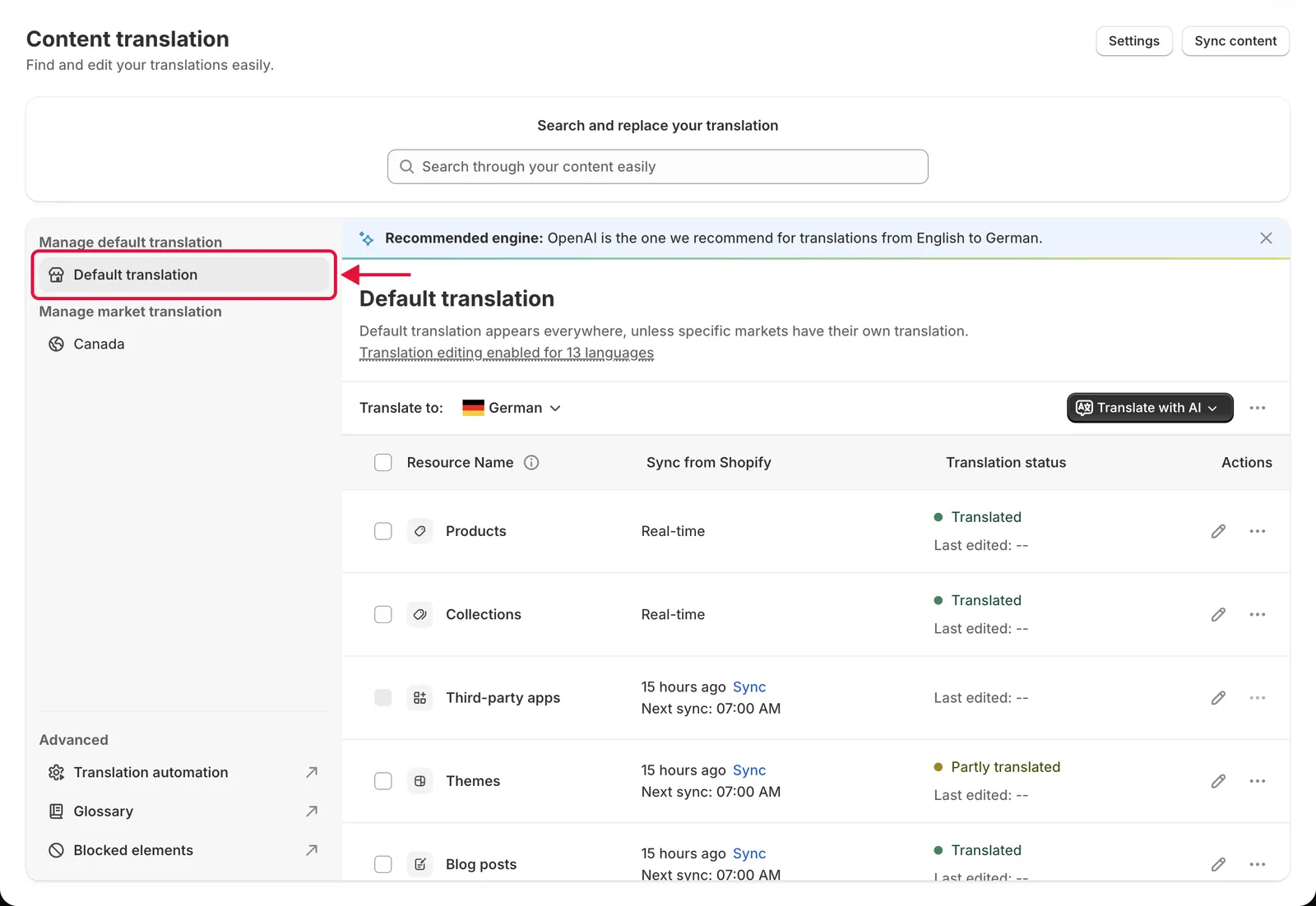
Open Content translation. Under Manage default translation, Default translation is selected. Translations you make here apply to all markets.
Choose a market
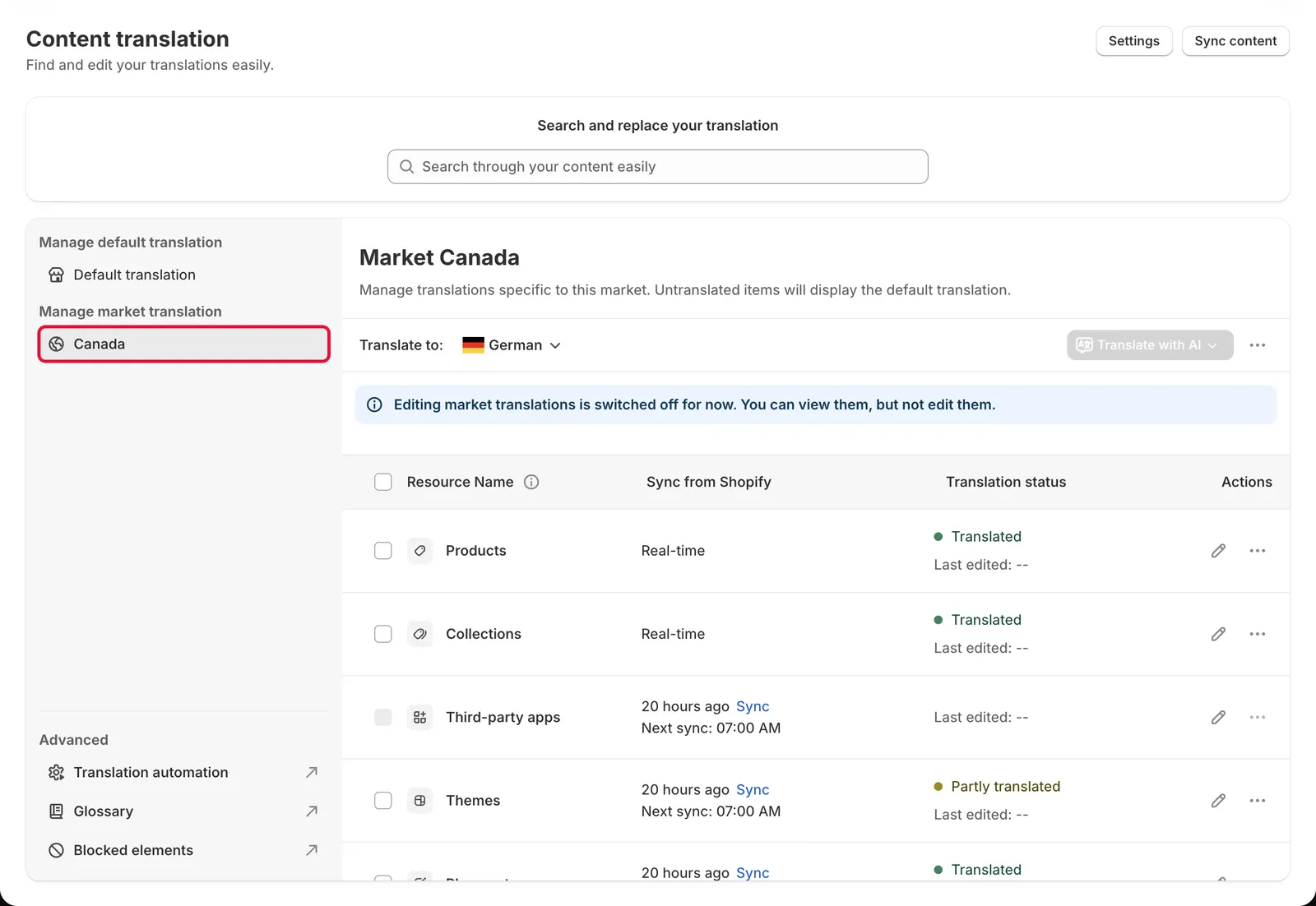
Under Manage market translation, select a market. Only markets that sell the language you picked are listed. The page now manages translations for that market only.
Translate for the market
Translate with AI, or select the pencil in a row to edit by hand. Your text is saved as the translation of this market only. The default translation does not change.
Switch scope in the editor
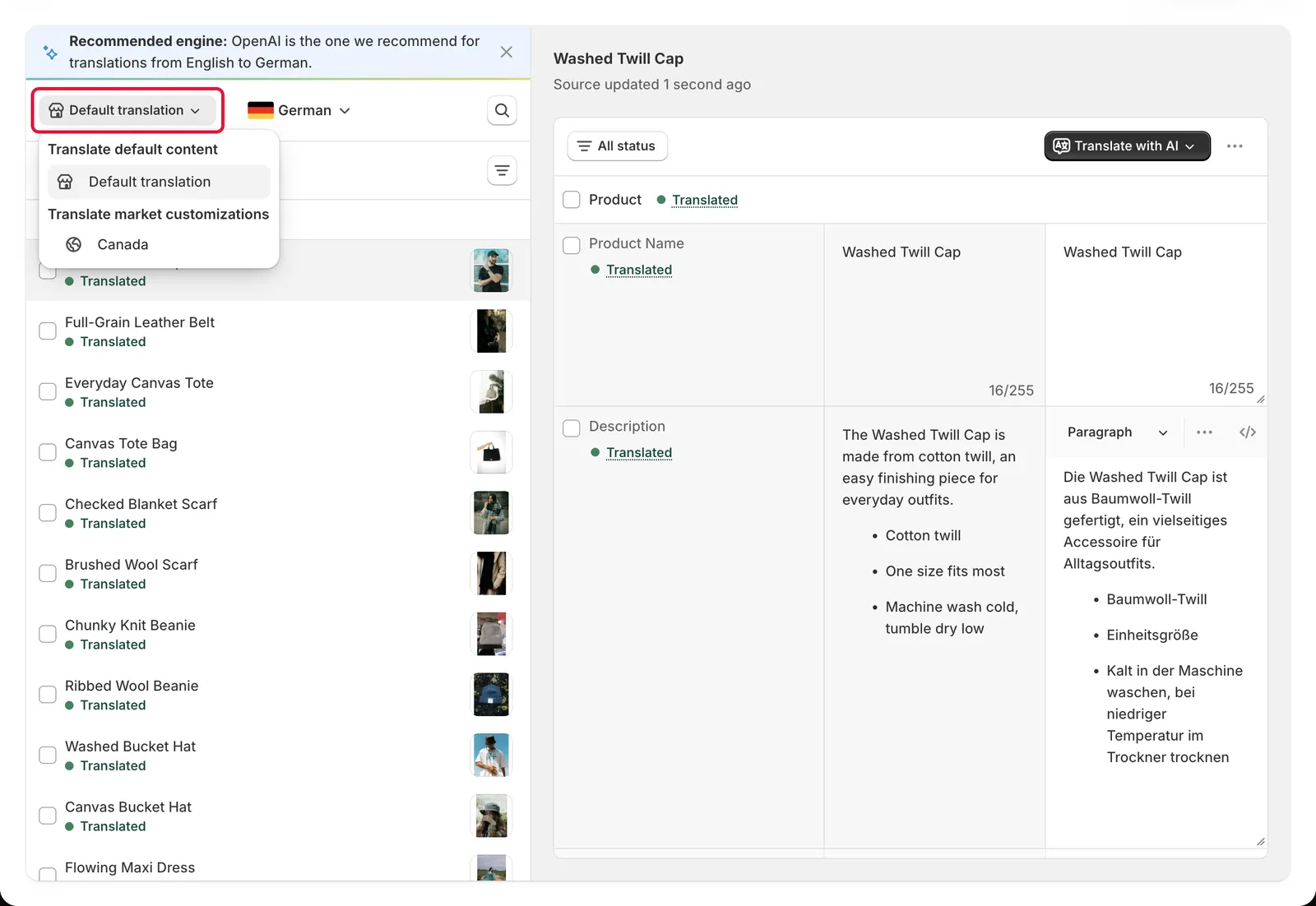
In the editor, open the scope button at the top. Pick a translation under Translate default content or Translate market customizations. A line under the title says which one you are editing.
Go back to the default
To make one field follow the default again, select the Re-use existing translation icon in the field footer. In the dialog, pick Use default translation as the translation to re-use, then select Use default translation to confirm. That option is off when the field already uses the default. To remove many market translations, select Delete translations in a market. It deletes only the translations of that market.
Good to know
- A note in the card tells you where you are. On a market without its own translation, it offers a link to the default translation.
- In the editor, the globe icon in a field footer, Translations in other markets, lists the default translation first, then every market. A market shows Uses the default translation or No translation yet.
- To copy translations from one market to another, see Re-use translations between markets.
- Without market translations on your plan, you can open a market and read it, but the buttons that change it are off. You can still delete market translations.
- Notifications and packing slips have one translation for all markets. In a market they are read-only.
Related articles
Sync content from Shopify and resolve conflicts
Fetch new and changed content from Shopify into SmartCS, and choose what to keep when Shopify holds a different translation.
Translate content with AI
Translate ticked items or a whole resource with an AI engine. Check the quote, add instructions and start the translation.
Last updated November 18, 2026