Edit translations manually
Open a resource in the translation editor, type or fix a translation field by field, use rich text, and save your changes.
Use the translation editor to write or correct a translation yourself. You work on one resource at a time, such as a product, and save every field you changed in one step.
Before you start
Add the language you want to edit, and keep translation edits turned on for it. If edits are off, the editor shows the text but you cannot change it. See Turn translation edits on or off.
Steps
Open the editor
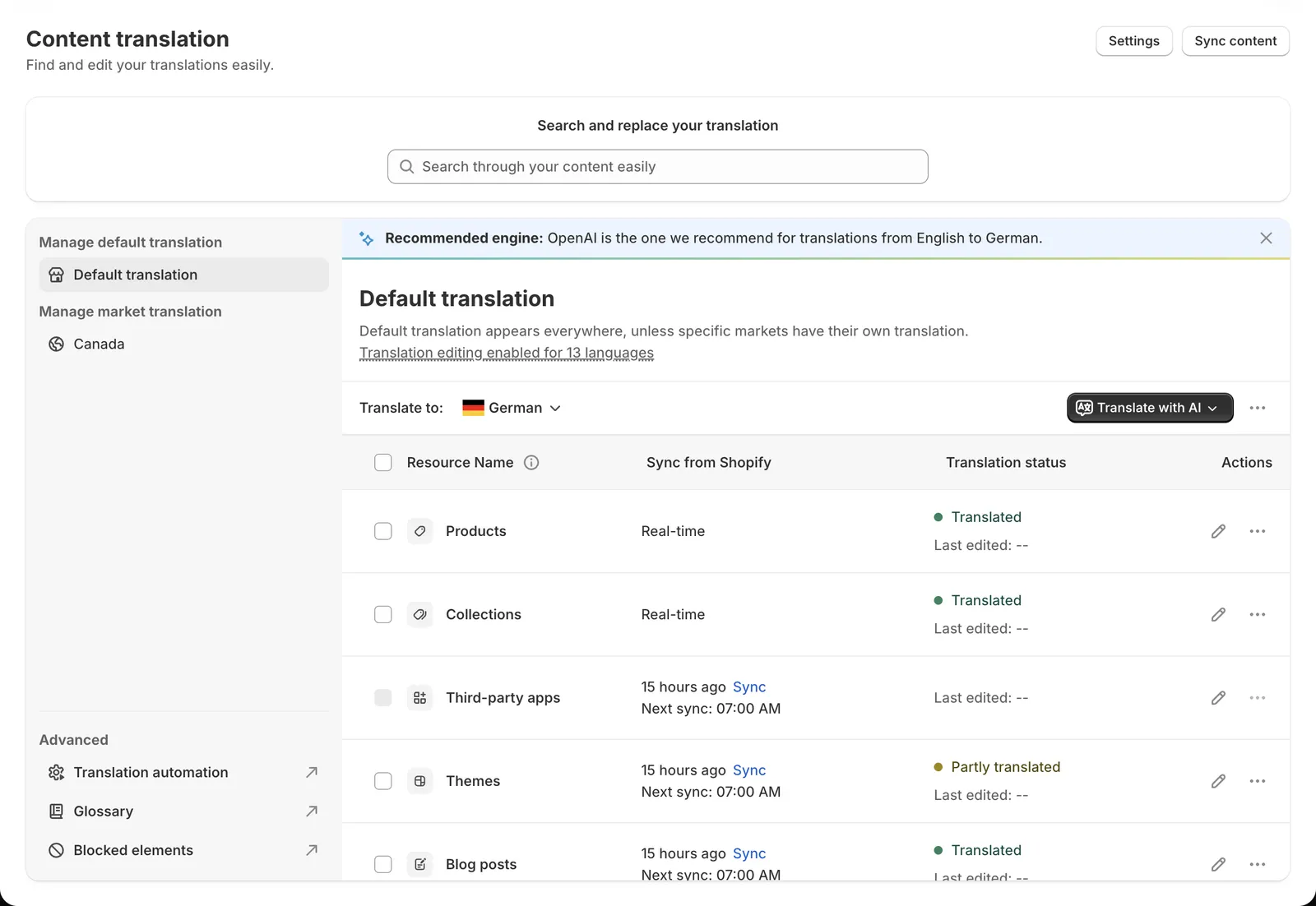
In SmartCS: Currency & Translate, open コンテンツの翻訳. Choose the language in the 翻訳先: list. In the row of a group, such as 商品, select the edit (pencil) button. The editor opens in a full-screen window.
Choose an item
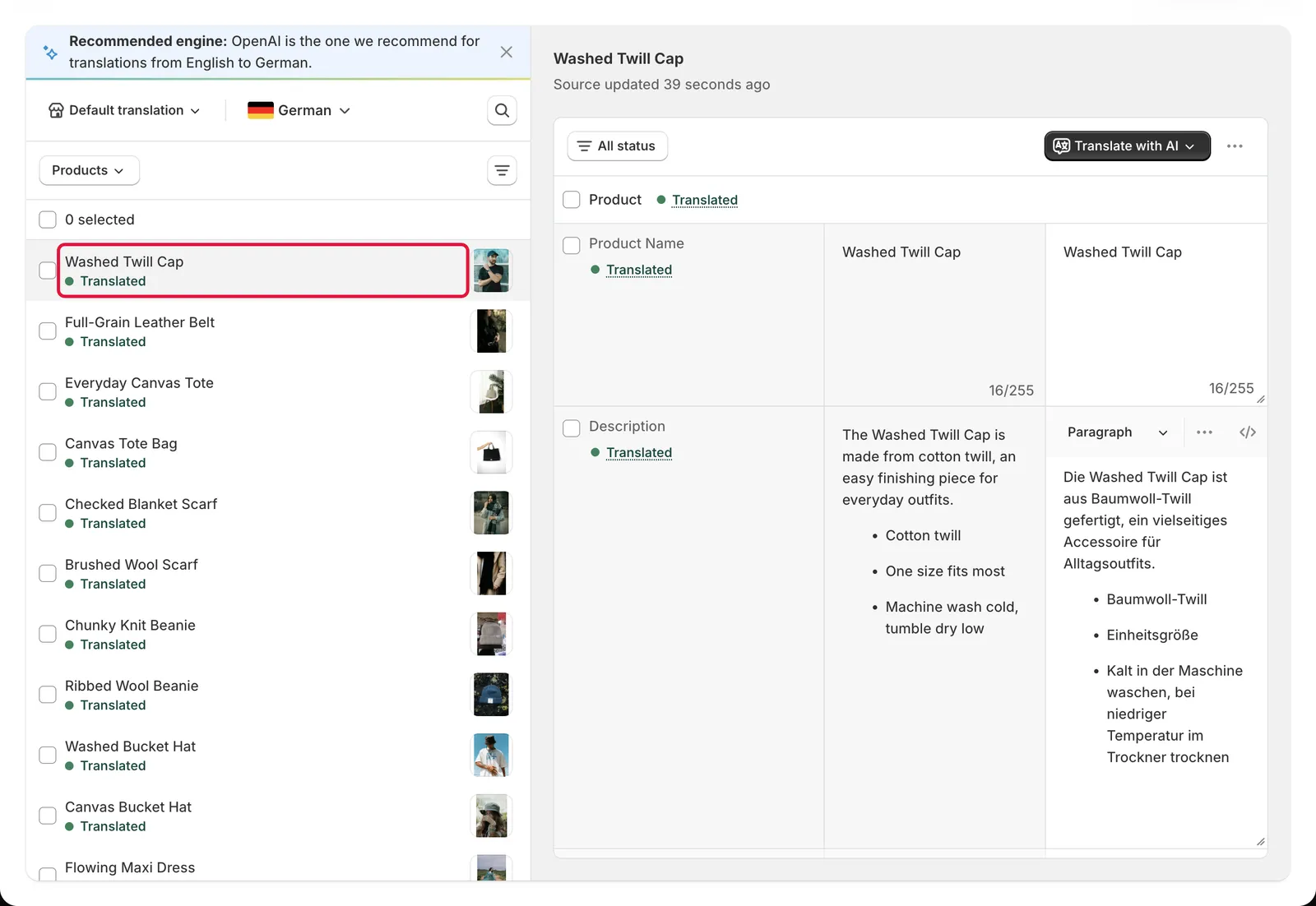
The list on the left shows the items of the group. The first item opens by itself. Select another item to open it. To find an item faster, see Find and filter content to translate.
Choose what to translate
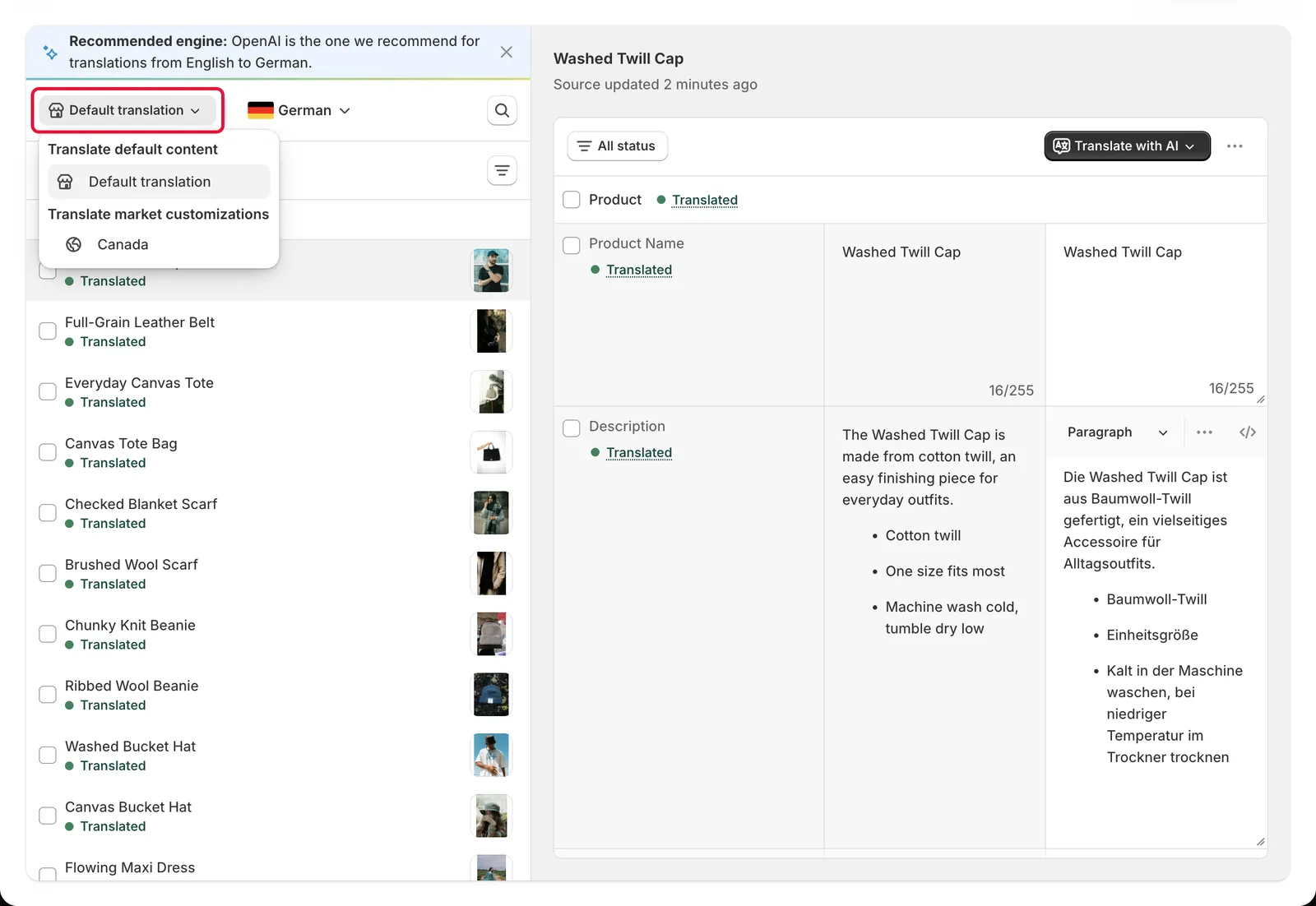
Use the first button in the left column to pick the scope. デフォルトのコンテンツを翻訳 edits the translation shown in every market. マーケットのカスタマイズを翻訳 lists the markets. ご利用になるにはお問い合わせください Without market translations in your plan, you can view a market but not edit it. See Default and market translations.
Type a translation
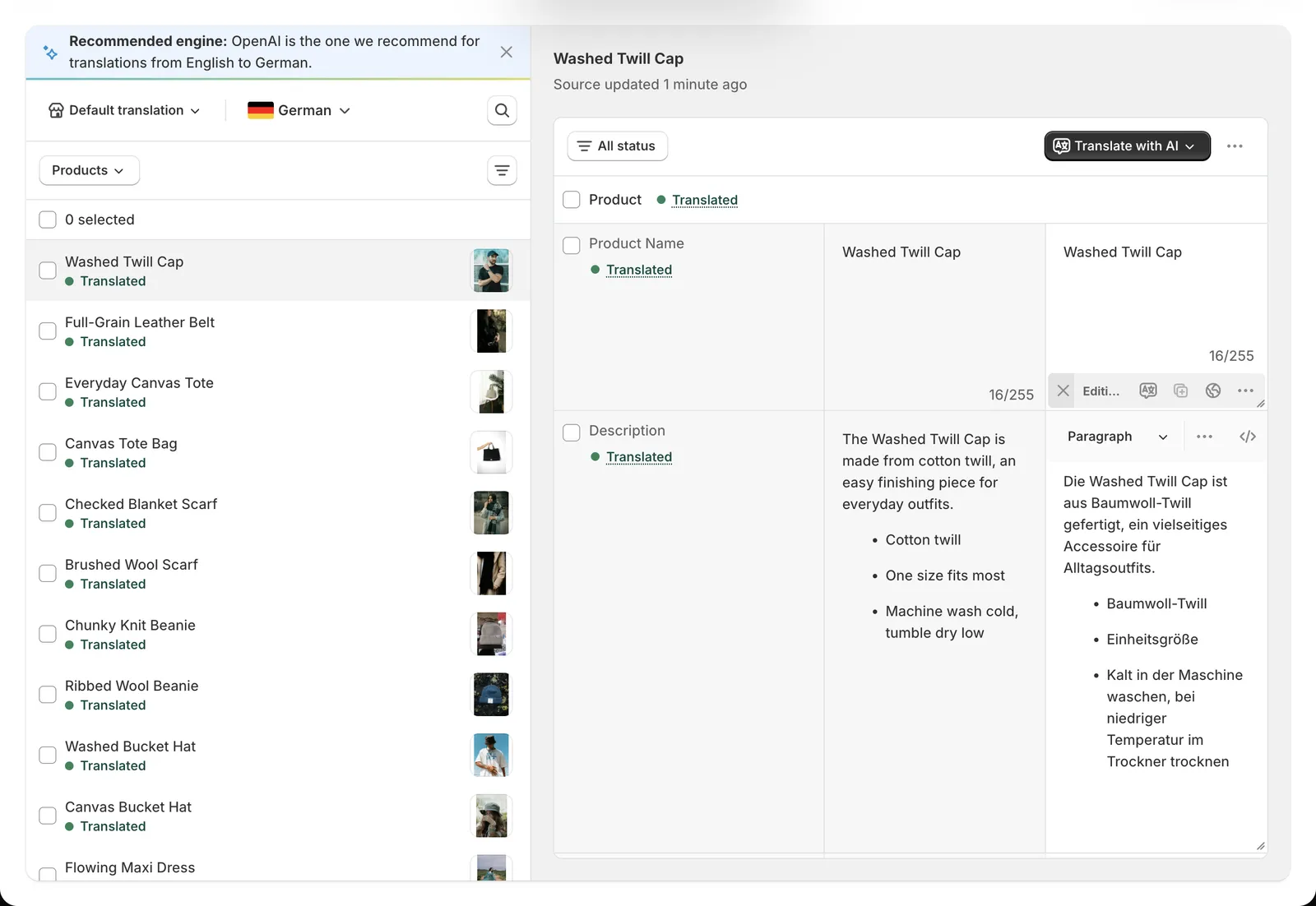
Each field is a row. The source text is on the left and your translation box is on the right. Click the box and type. A counter shows the length when the field has a limit. A status shows beside the field name, such as 翻訳済み or 未翻訳.
Format rich text
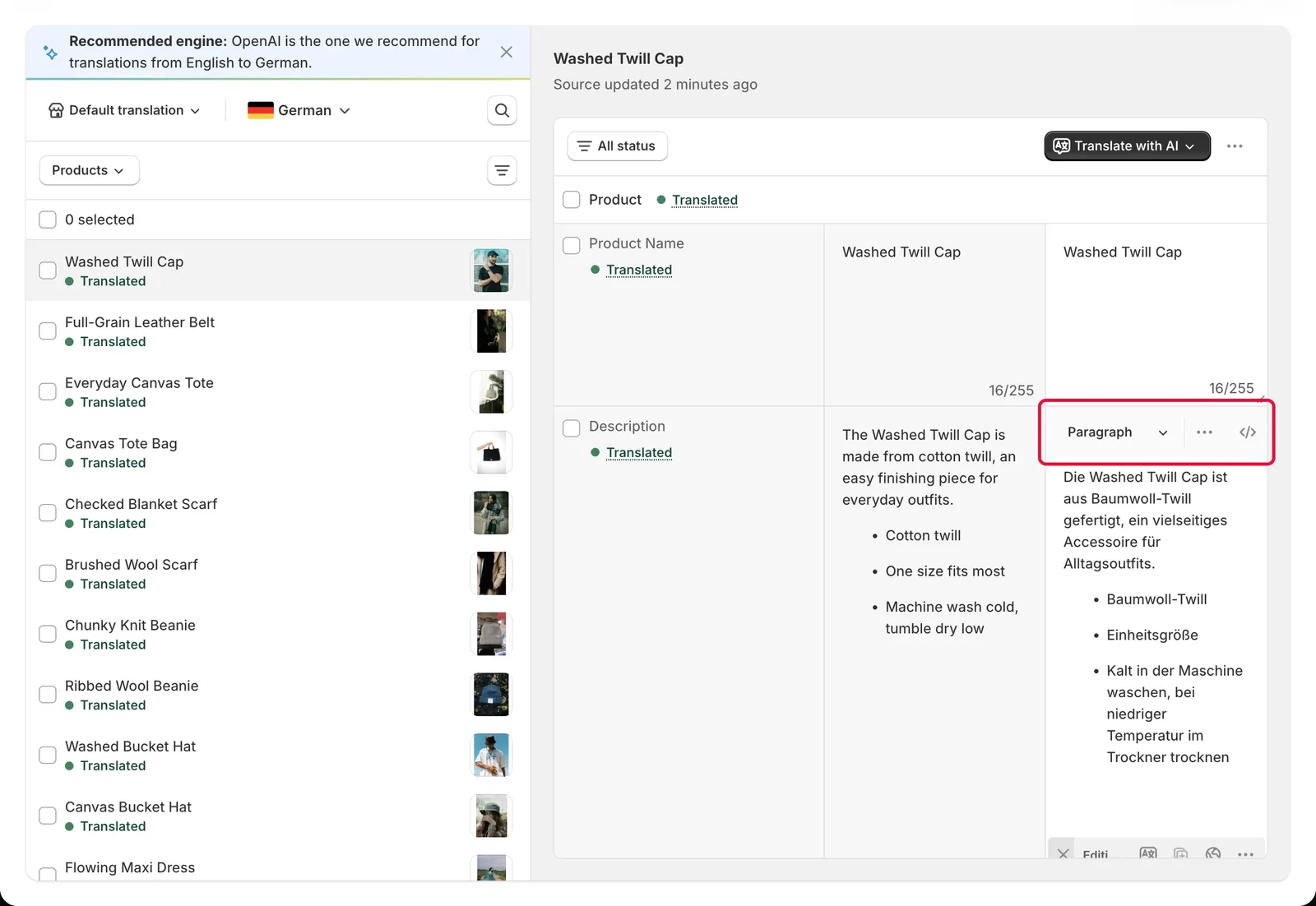
Fields that hold HTML, such as a product description, open with a toolbar. Use it for headings, bold, lists, links and colors. Select その他の書式 for more tools.
Edit the HTML
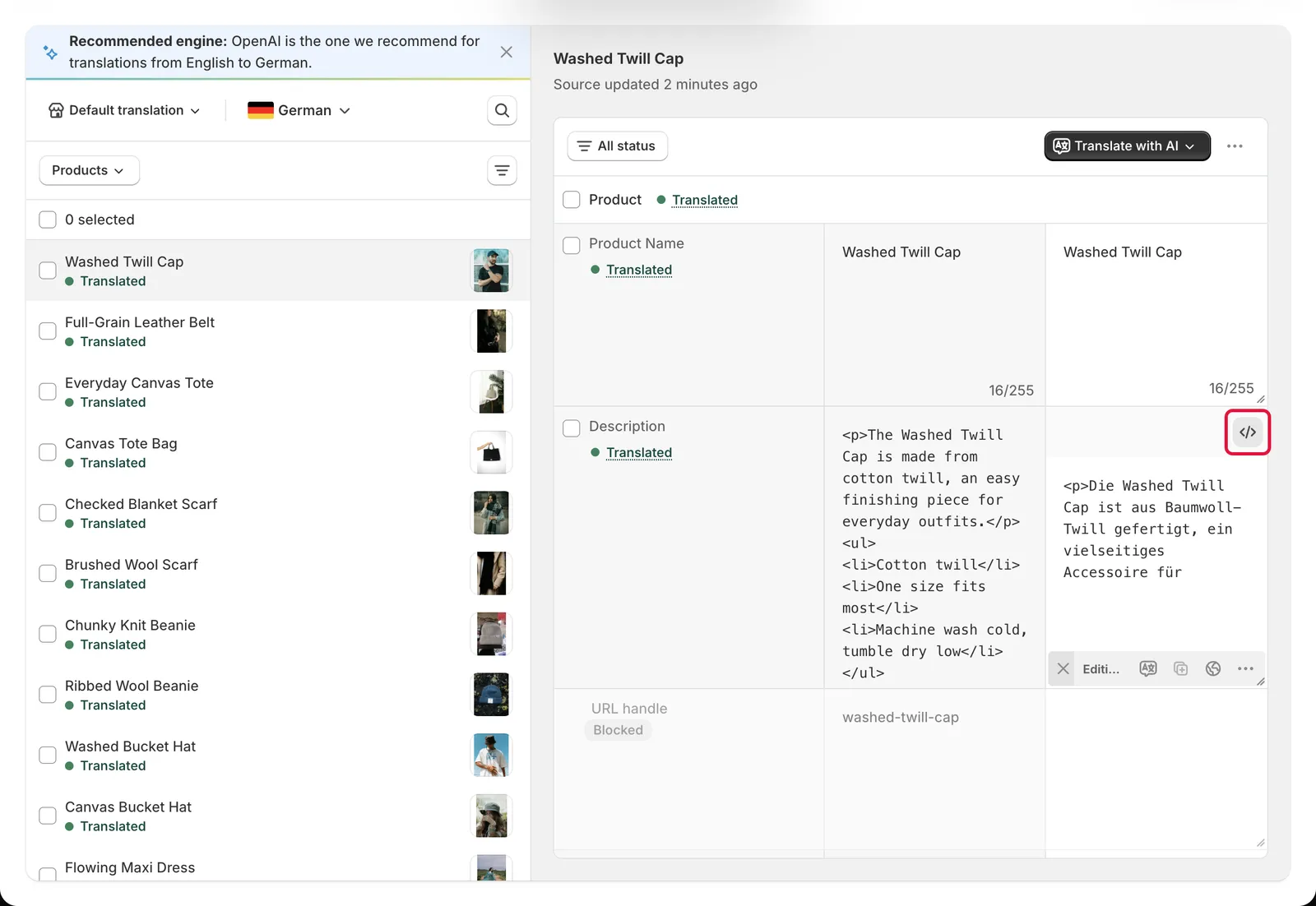
Select the code button at the end of the toolbar (ソースコード) to edit the HTML itself. Select the same button (ビジュアルエディター) to go back. If the HTML has elements the visual editor cannot keep, the field stays in code view.
Save your changes
When you change a field, a save bar appears at the top of the page. Select 保存 to save every changed field of the item, or 破棄 to drop your edits. A 保存しました message confirms it. If you open another item first, the editor asks you to 編集を続ける or 変更を破棄.
Field tools
Click a field to show a strip below its box. It has these tools:
- AIで翻訳 translates only this field. See Translate with AI.
- 既存の翻訳を再利用 opens a list of up to 10 existing translations of the same text, for example from another resource. Pick one to copy it into the field. In a market, the list also offers the default translation. The button is dimmed when there is nothing to re-use.
- その他の操作 opens 翻訳履歴 and この要素の翻訳をブロック. ご利用になるにはお問い合わせください 翻訳履歴 is locked on a plan that keeps no history. See Translation history and Blocked elements.
To filter the fields of one item, select すべてのステータス above the fields.
Good to know
- A saved translation cannot be empty. To remove one, use 翻訳を削除. See Mark as translated and delete translations.
- A field marked ブロック済み is locked on purpose and cannot be edited.
- If the original text changed in Shopify, the field is highlighted. Check your translation before you save again.
- If a field was changed in Shopify after your last sync, choose 自分の翻訳を保持 or Shopifyの翻訳を使用. See Sync content and resolve conflicts.
メモ
When a job is translating an item, the editor locks that item until the job finishes. A language with edits off is read-only too.
関連記事
Translation engines: OpenAI, Gemini, Grok, DeepSeek
See which translation engines SmartCS offers and what each needs. Set the tone, or use your own API key for OpenAI or Gemini.
Find and filter content to translate
Search your store content, switch between resource groups, and filter the editor list by translation status or product details.
最終更新日:2026年11月18日