Edit translations manually
Open a resource in the translation editor, type or fix a translation field by field, use rich text, and save your changes.
Use the translation editor to write or correct a translation yourself. You work on one resource at a time, such as a product, and save every field you changed in one step.
Before you start
Add the language you want to edit, and keep translation edits turned on for it. If edits are off, the editor shows the text but you cannot change it. See Turn translation edits on or off.
Steps
Open the editor
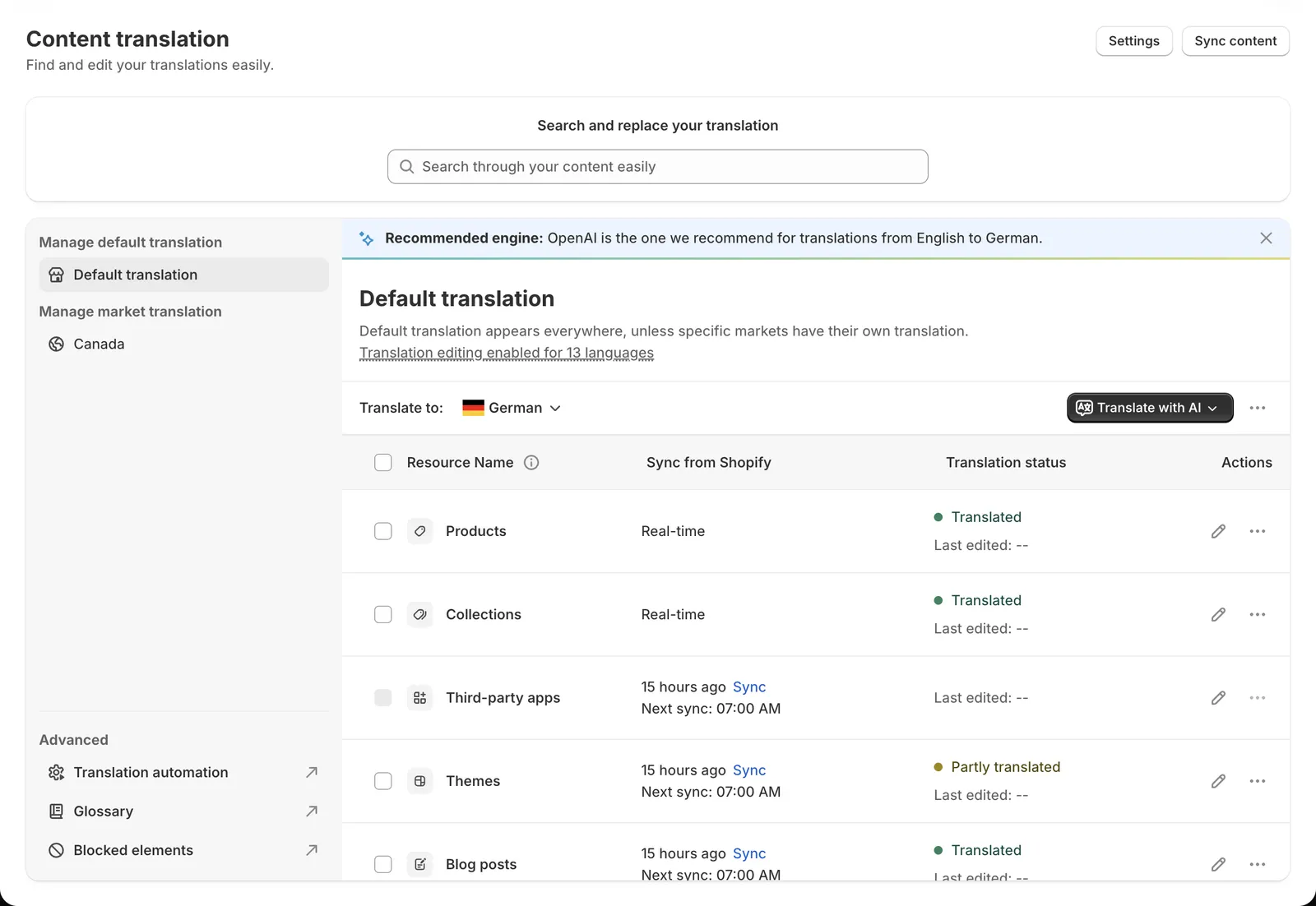
In SmartCS: Currency & Translate, open Tłumaczenie treści. Choose the language in the Przetłumacz na: list. In the row of a group, such as Produkty, select the edit (pencil) button. The editor opens in a full-screen window.
Choose an item
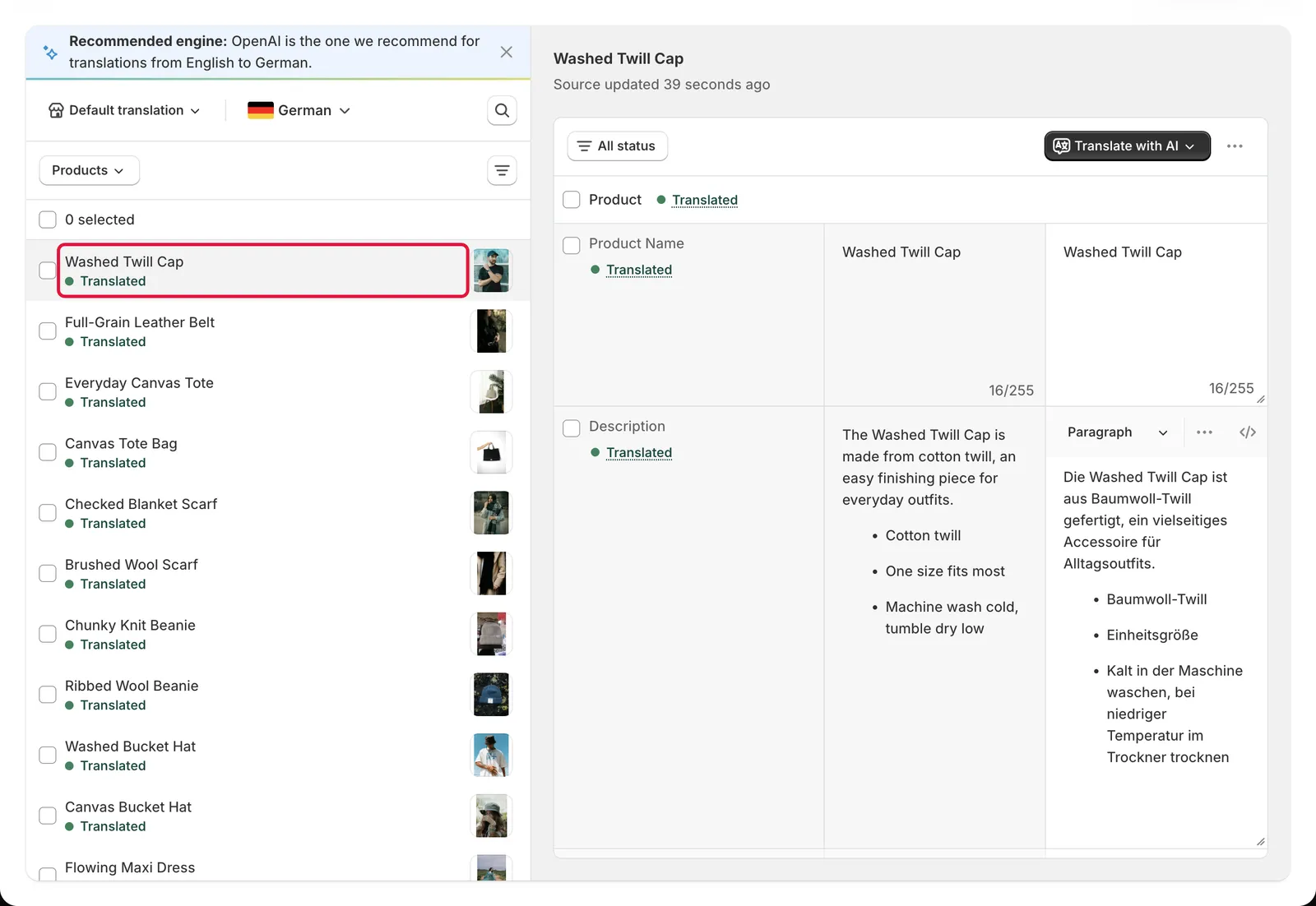
The list on the left shows the items of the group. The first item opens by itself. Select another item to open it. To find an item faster, see Find and filter content to translate.
Choose what to translate
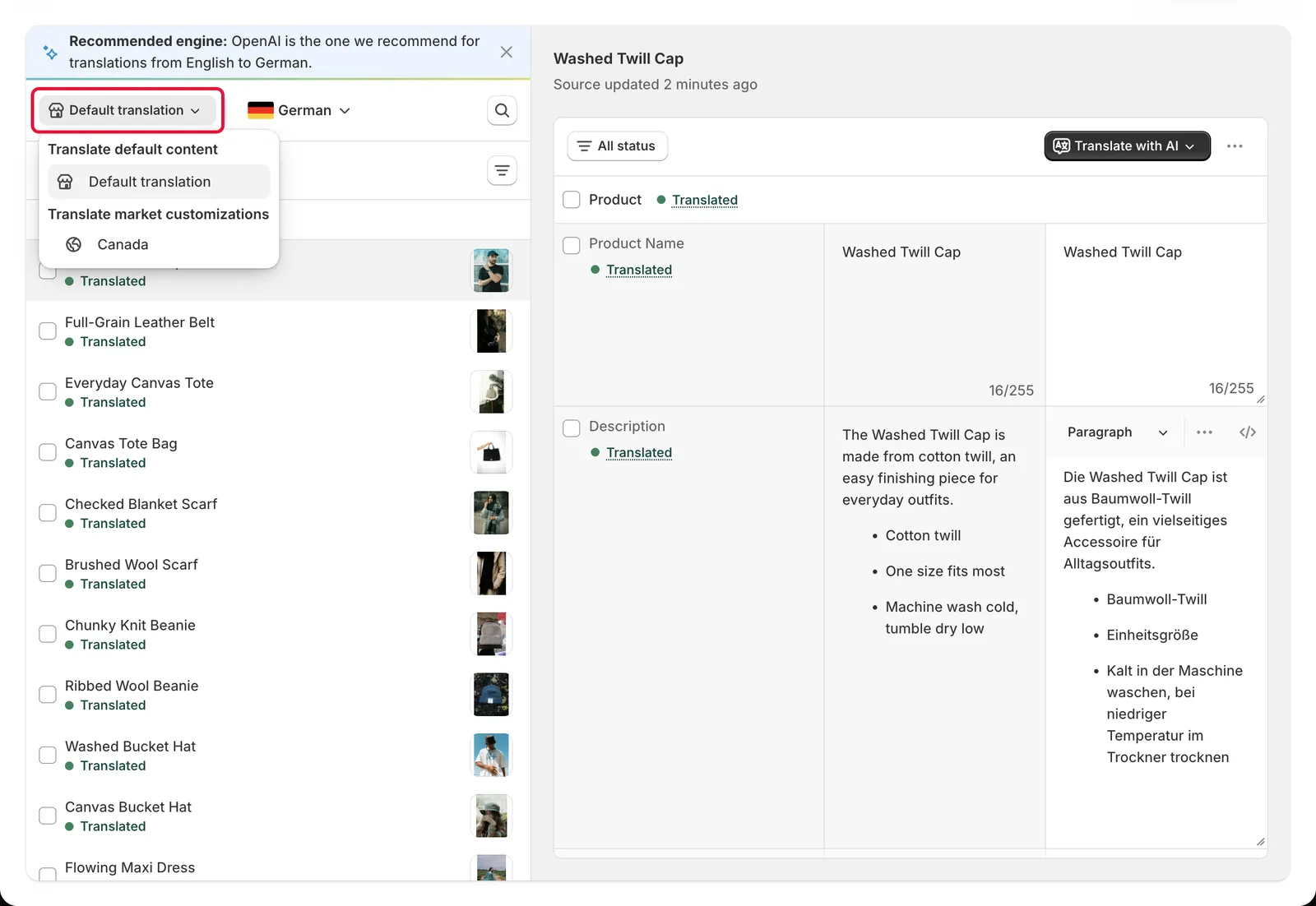
Use the first button in the left column to pick the scope. Przetłumacz treści domyślne edits the translation shown in every market. Przetłumacz personalizacje rynku lists the markets. Skontaktuj się z nami, aby to włączyć Without market translations in your plan, you can view a market but not edit it. See Default and market translations.
Type a translation
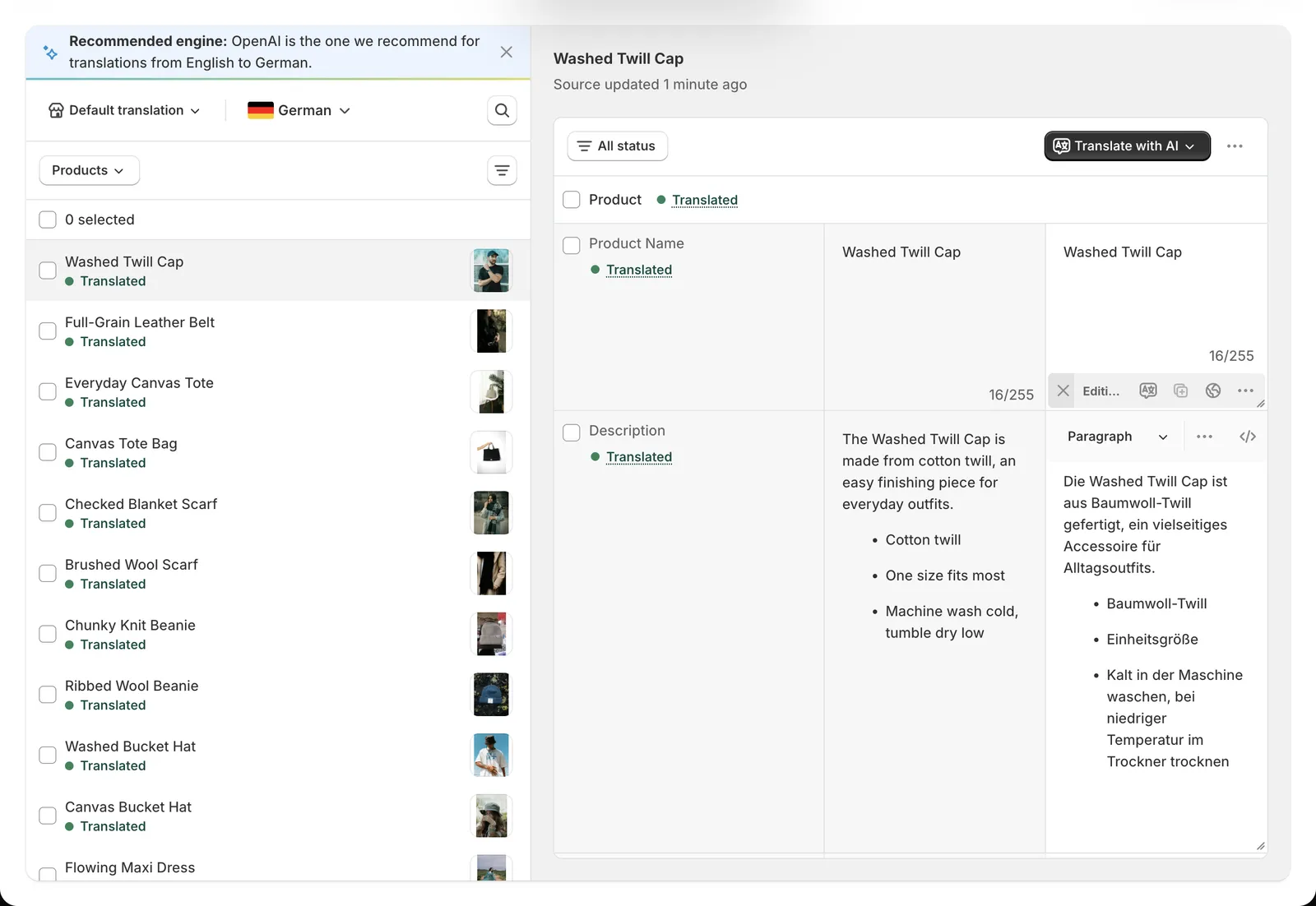
Each field is a row. The source text is on the left and your translation box is on the right. Click the box and type. A counter shows the length when the field has a limit. A status shows beside the field name, such as Przetłumaczone or Nieprzetłumaczone.
Format rich text
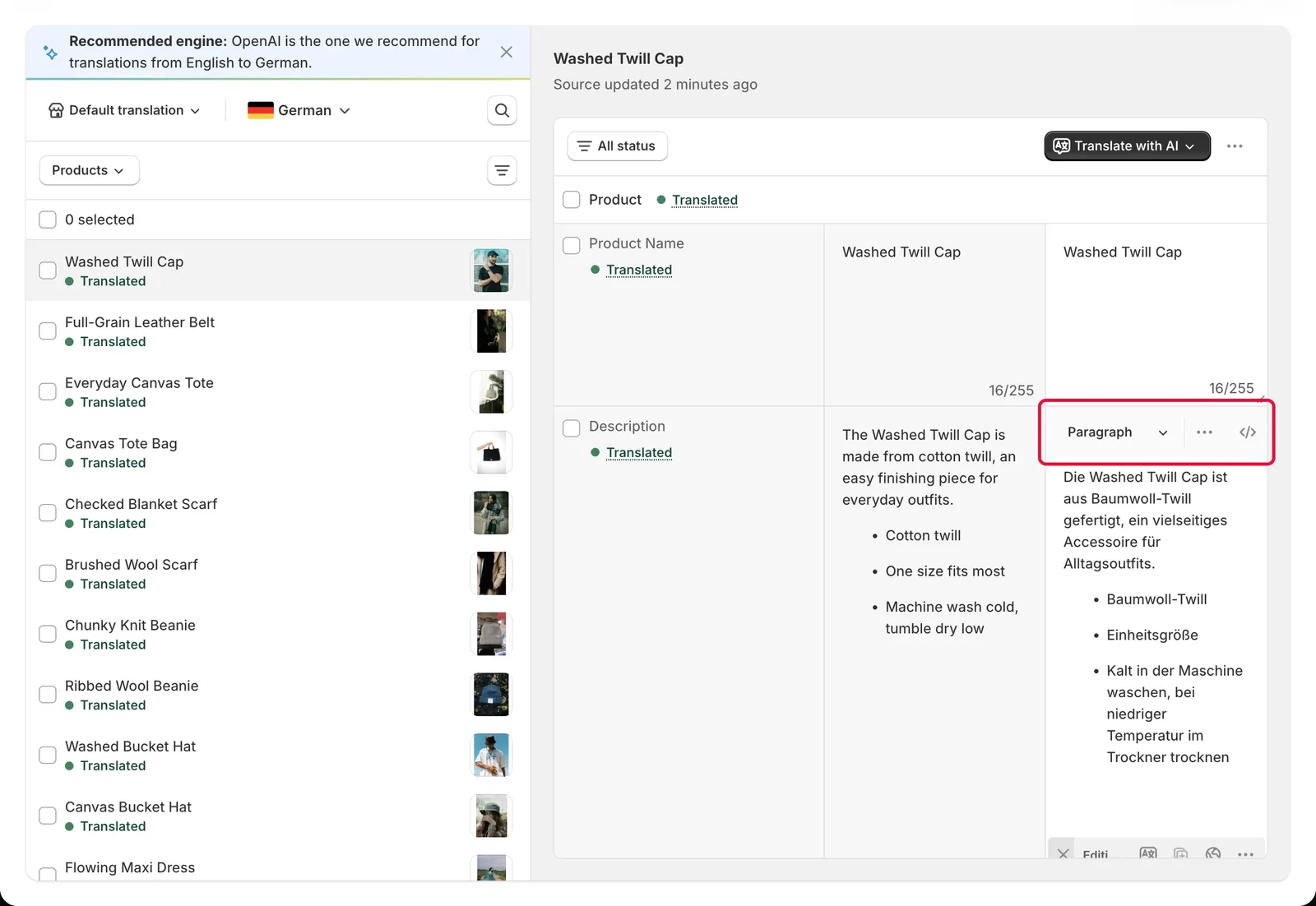
Fields that hold HTML, such as a product description, open with a toolbar. Use it for headings, bold, lists, links and colors. Select Więcej opcji formatowania for more tools.
Edit the HTML
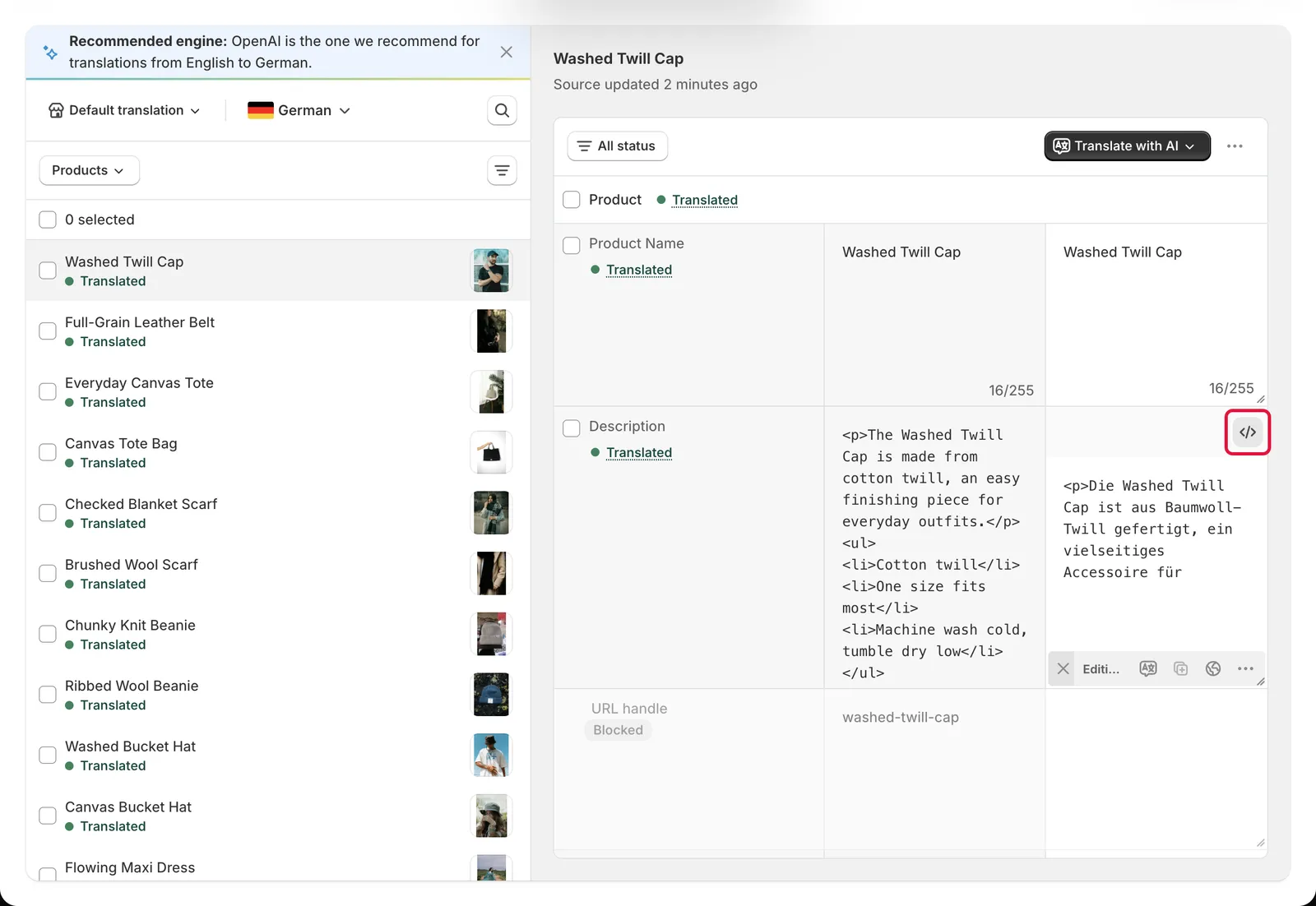
Select the code button at the end of the toolbar (Kod źródłowy) to edit the HTML itself. Select the same button (Edytor wizualny) to go back. If the HTML has elements the visual editor cannot keep, the field stays in code view.
Save your changes
When you change a field, a save bar appears at the top of the page. Select Zapisz to save every changed field of the item, or Odrzuć to drop your edits. A Zapisano message confirms it. If you open another item first, the editor asks you to Kontynuuj edycję or Odrzuć zmiany.
Field tools
Click a field to show a strip below its box. It has these tools:
- Przetłumacz za pomocą AI translates only this field. See Translate with AI.
- Użyj ponownie istniejącego tłumaczenia opens a list of up to 10 existing translations of the same text, for example from another resource. Pick one to copy it into the field. In a market, the list also offers the default translation. The button is dimmed when there is nothing to re-use.
- Więcej działań opens Historia tłumaczeń and Zablokuj tłumaczenie tego elementu. Skontaktuj się z nami, aby to włączyć Historia tłumaczeń is locked on a plan that keeps no history. See Translation history and Blocked elements.
To filter the fields of one item, select Wszystkie statusy above the fields.
Good to know
- A saved translation cannot be empty. To remove one, use Usuń tłumaczenia. See Mark as translated and delete translations.
- A field marked Zablokowane is locked on purpose and cannot be edited.
- If the original text changed in Shopify, the field is highlighted. Check your translation before you save again.
- If a field was changed in Shopify after your last sync, choose Zachowaj moje or Użyj z Shopify. See Sync content and resolve conflicts.
Uwaga
When a job is translating an item, the editor locks that item until the job finishes. A language with edits off is read-only too.
Powiązane artykuły
Translation engines: OpenAI, Gemini, Grok, DeepSeek
See which translation engines SmartCS offers and what each needs. Set the tone, or use your own API key for OpenAI or Gemini.
Find and filter content to translate
Search your store content, switch between resource groups, and filter the editor list by translation status or product details.
Ostatnia aktualizacja: 18 listopada 2026